
What Is Meniscus Repair?
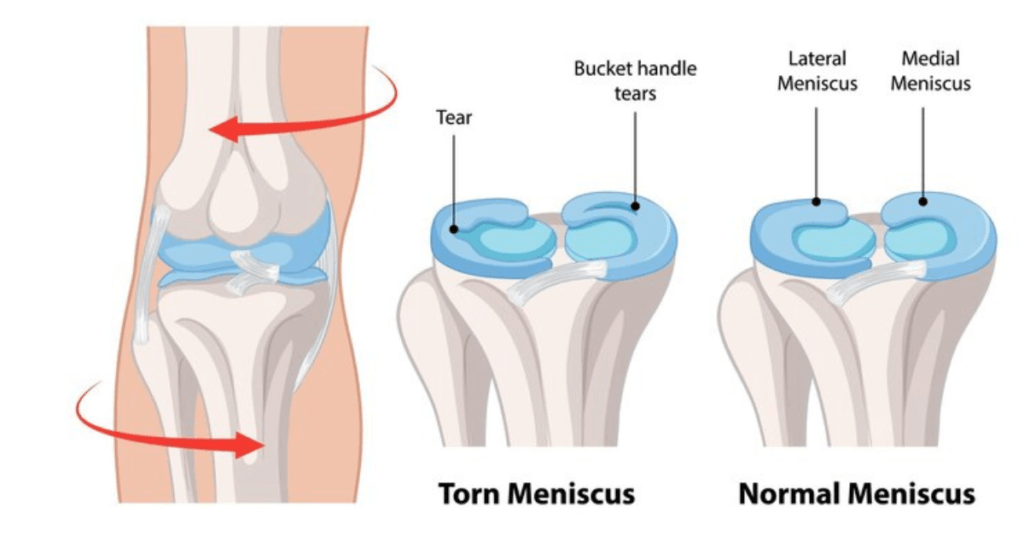
The meniscus acts as the knee’s shock absorber. When torn, it can cause locking, swelling, and early arthritis. Joint Robo prioritises preservation through all-inside sutures, root repairs, and biologic augmentation so native tissue heals and continues protecting cartilage for years to come.
Types of Meniscus Tears We Treat
- Longitudinal & bucket-handle tears: Cause locking and require urgent repair to preserve hoop stress.
- Radial and flap tears: Addressed with sutures or implants to prevent propagation.
- Root tears: Reattached with transtibial tunnels to restore load sharing.
- Degenerative tears: Managed with selective smoothing plus biologics when appropriate.
Who Needs Meniscus Surgery?
Early intervention preserves cartilage and keeps athletes in the game.
- Locking or catching knees: Bucket-handle tears that prevent full extension.
- Acute sports injuries: Traumatic tears in young athletes with good tissue quality.
- Root or radial tears: Tears that destabilise the entire meniscus and accelerate arthritis.
- Persistent pain: Degenerative tears failing physiotherapy and injections.
MRI, weight-bearing radiographs, and sometimes diagnostic ultrasound help map tear patterns and plan the repair approach.
Meniscus Repair Procedure
Arthroscopic surgery uses tiny incisions, preserving surrounding structures and enabling quick recovery.
- Diagnostic arthroscopy: Confirms tear pattern, assesses cartilage, and addresses associated lesions.
- Preparation: The tear edges are freshened to stimulate healing.
- Suturing or fixation: All-inside, inside-out, or outside-in sutures anchor the tear; root tears use transtibial tunnels.
- Biologic augmentation: PRP or marrow venting enhances healing in avascular zones.
Benefits of Meniscus Preservation
- Shock absorption: Maintaining the meniscus protects cartilage from overload.
- Joint longevity: Lower risk of early arthritis compared to meniscectomy.
- Sport readiness: Athletes regain cutting, squatting, and rotational movements with confidence.
- Minimal downtime: Most patients return to daily activities within weeks thanks to arthroscopy.
Recovery Milestones
- Weeks 0–2: Partial weight-bearing with crutches, brace locked in extension for root repairs.
- Weeks 3–6: Gradual flexion to 90°, closed-chain strengthening, and cycling.
- Months 3–4: Running progression, agility drills, and plyometrics.
- Months 5–6: Sport-specific training and return-to-play testing.
- Long-term: Maintenance exercises keep the knee strong and resilient.
Risks & Considerations
Meniscus surgery is safe, but realistic expectations aid success.
- Failure to heal: Some tears may not heal fully, especially in poorly vascularised zones.
- Re-tear: High-impact activities before clearance can compromise repairs.
- Stiffness: Prevented through guided physiotherapy and early motion when allowed.
- Infection or clot: Extremely rare with minimally invasive techniques.
- Need for staged procedures: Chronic tears with malalignment may require osteotomy in addition to repair.
Our team monitors healing with clinical exams and, when necessary, follow-up imaging to ensure the meniscus remains healthy.