
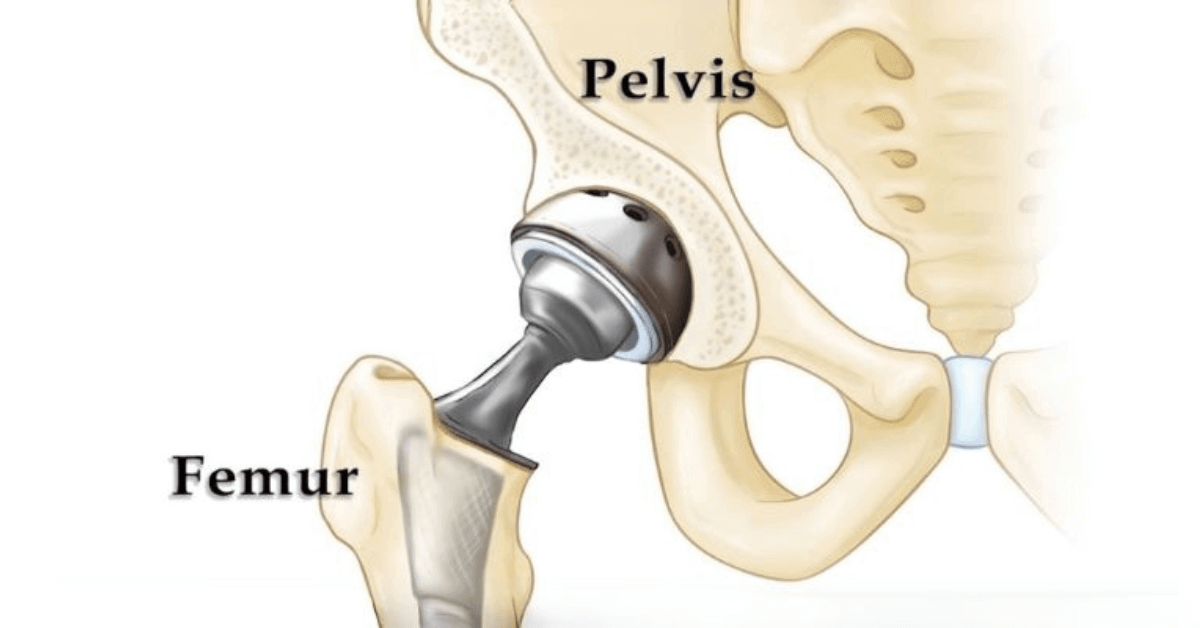
What Is Total Hip Replacement?
Hip replacement is a highly successful surgery in which portions of the hip joint are replaced with prostheses (implants). It involves removing and replacing portions of the pelvis and femur (thigh bone) that form the hip joint. Hip replacement is performed primarily to relieve hip pain and stiffness caused by hip arthritis. This procedure is also sometimes used to treat injuries such as a broken or improperly growing hip and other conditions.
Types of Hip Replacement
- Total Hip Replacement: The most common type of hip replacement surgery is total hip replacement (also called total hip arthroplasty). In this surgery, worn-out or damaged sections of the hip are replaced with artificial implants.
- Partial Hip Replacement: It also called hemiarthroplasty, involves replacing only one side of the hip joint—the femoral head—instead of both sides as in total hip replacement.
- Hip Resurfacing: Resurfacing the femoral head and socket of the hip is most commonly done in younger, active patients.
Total Hip Replacement Recovery
Your recovery will begin directly following surgery in the Post-Anesthesia Care Unit (PACU), where your medical team will manage your pain and monitor your vital signs.
Once the anesthesiologist is satisfied with your condition, you will be moved to an inpatient recovery room to monitor your progress. You will most likely have a dressing and tube on your hip for drainage, which should be removed the day after surgery.
The pain management team will assess your medication and use a multifaceted approach to ensure comfort and mobility during rehabilitation.
Within 24 hours, you will begin rehabilitation with a physical therapist. Your therapist will help you sit up, get in and out of bed, and practice walking and climbing stairs using a walker, cane, or sometimes crutches. You will then continue physical therapy outside the hospital for 6 to 8 weeks. After that period, most patients can do everyday activities and return to playing sports.
Advantages of Total Hip Replacement
However, Total hip replacement has several advantages. It can relieve pain, restore mobility, and improve quality of life. The surgery is also associated with a low risk of complications. Hip replacement is a surgery focused on reducing pain and getting you back to the activities you love. However, not all hospitals achieve the same results. Some are more reliable than others. With the help of the Joint Robo, you are in the Safe Hands of Dr. Pramod Bhor.